


When supporting development, it’s often the small, well-timed interventions that make the greatest difference. It may not look dramatic, but real change happens when we meet the body at the point it’s ready to move and respond.
In this Shoptalk we sit down with Stephen Cowan for a conversation on developmental cycles and how growth unfolds through the lens of Chinese medicine, exploring the early stages of life and how they shape what comes later.
We’ll discuss why viewing development as a straight, linear process isn’t clinically helpful, and instead look at the value of understanding growth as a spiral—where patterns repeat, evolve, and offer new opportunities for change. We’re reminded that when we meet someone in their process matters just as much as what we’re seeing.
Attention to the fundamentals—sleep, digestion, and emotional expression—is an essential part of supporting these transitions, and is often overlooked. We’ll explore how early imbalances can carry forward into later stages like puberty and adulthood, and how simple, consistent adjustments can significantly influence long-term outcomes.
We also discuss a shift in perspective when working with symptoms—moving away from asking why something is happening, and instead focusing on where it is held in the body. This creates an immediate, embodied way of working, where tension and release can help restore flow and ease.
As is often the case in Chinese medicine, effective support isn’t about doing more.
It’s about understanding timing, recognising the pattern, and with clarity and precision doing just enough.
Development as a spiral, not a straight line — Growth unfolds in repeating cycles, where each stage revisits earlier patterns with a new opportunity to respond and evolve.
Jing as an active process — Rather than a fixed essence, Jing is understood as something dynamic and unfolding, like a seed waking and expressing its potential over time.
Early stages shape later outcomes — What happens in childhood doesn’t disappear; it echoes forward into puberty, adulthood, and beyond, often resurfacing in new forms.
Transitions as moments of opportunity — Each developmental shift carries both challenge and potential, offering a chance to resolve what was previously unresolved.
Support the fundamentals first — Sleep, digestion, and emotional expression are central to smooth development, and disruptions here can ripple across multiple stages.
Ask where, not why — Bringing attention to where symptoms are held in the body creates a more direct, embodied pathway for understanding and treatment.
Tension before release — Encouraging patients to feel and amplify holding patterns can help unlock natural relaxation and restore flow.
Symptoms as intelligent signals — Behaviours and physical complaints are often the body’s attempt to adapt or communicate, rather than problems to suppress.
Development as guidance, not correction — The role of the practitioner is to accompany and orient the process, helping patients navigate change rather than forcing outcomes.
Healing as a repeated opportunity — Each return of the cycle offers another chance to address past patterns with greater awareness and capacity.
Don’t ask “why” ask “where” in order to localize the conflict and promote flow (通 tong~ healthy communication). Consider Ke triads when there’s imbalance.
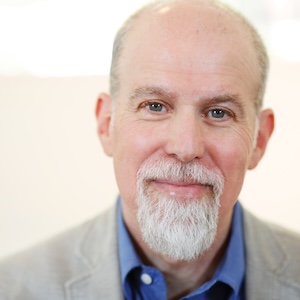
Stephen Cowan MD is a board-certified pediatrician with over 35 years of clinical experience working with children. He has a subspecialty in Developmental Pediatrics and is a fellow in the American Academy of Pediatrics serving as a member of the AAP section on Developmental Disabilities. He is a longtime student of East Asian medicine and Taiji Quan, practicing what he calls “developmental acupuncture” that encourages life as a perpetual journey of change, recognizing the inseparability of mind, body and spirit and the intimate ecological relationship with our environment.
Dr. Cowan lectures internationally and has developed Jingshen Pediatrics Certificate Training with Moshe Heller to promote the application of Chinese Medicine in children. He has contributed to a number of books on integrative medicine and is the author of several books including “Fire Child Water Child: How understanding the five types of ADHD can help you improve your child’s self-esteem and attention,” “ A Ring Without End, Reflections on Classical Chinese Medicine Mind/Body Mapping,” with Z’ev Rosenberg and the just released translation of “Sage Principles, Discourses on Taiji Medicine by Master Cheng Man-ching.”
He is also the author/illustrator of several children’s books including the “Weather’s Bet,” “Vessel or Promises” and “The Lost Elephant,” that introduces the five elements to children. Dr. Cowan currently has a medical consultation practice in Westchester, New York.
Visit Stephen on his website and find out more about what is doing with kids at www.tournesolkids.org.


You don't have access to purchase this item.


