





Clinical practice asks us to recognise patterns, trust experience, and make decisions under uncertainty. But what happens when discovery comes not from certainty, but from staying open to surprise?
Dr. Neil Theise is a liver pathologist, stem cell researcher, Zen practitioner, and one of the scientists behind the discovery of the interstitium. In this conversation, he joins Michael to explore the tension between expertise and beginner’s mind, and how curiosity itself can become a path to deeper understanding.
Listen into this discussion as they explore the body as both structure and living continuum; how fascia, fluid, electricity, and awareness may be more interconnected than we realise; why perception changes depending on the “scale” we look from; and how science, meditation, and direct experience each reveal different truths about what it means to be human.
In the mind of the beginner there are many possibilities; in the mind of the expert there are few.
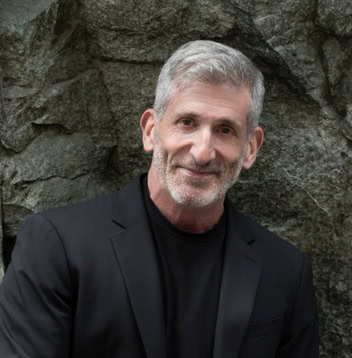
Dr. Neil Theise
Neil Theise is a professor of pathology at the NYU Grossman School of Medicine. Through his scientific research, he has been a pioneer of adult stem cell plasticity and the anatomy of the human interstitium.
Dr. Theise’s studies in complexity theory have led to interdisciplinary collaborations in fields such as integrative medicine, consciousness studies, and science-religion dialogue. He is author of “Notes on Complexity: A Scientific Theory of Connection, Consciousness, and Being”, 2023 winner of the Nautilus Gold Prize for Science/Cosmology and long listed for Pen/E.O. Wilson Prize for Literary Science Writing.
He is a Senior Student of the Village Zendo in NYC. He is currently working on his next book, a memoir of his mother’s elder years and the non-local states of consciousness that emerged, “Sarah in the In-Between” to be published by Spiegel & Grau in 2027.
For more on this work and related explorations, visit the Phenomena Healing website.
You can also listen to the Radiolab podcast: Interstitium, which explores related ideas through science and storytelling.
For another perspective, check out the The Telepathy Tapes podcast episode, “Talk Tracks – S2 E5.”
For deeper reading, see Notes on Complexity: A Scientific Theory of Connection, Consciousness and Being.
You don't have access to purchase this item.


