





A tradition can feel like a single lineage, but some histories reveal a wider terrain — one that spans discernment, devotion, and the slow accumulation of who gets to call something new.
In this conversation with Volker Scheid, we explore four competing visions of what good Chinese medicine practice actually is, from Zhu Danxi’s cultivated discernment to Zhang Zhongjing’s devotional authority, and how each answers the challenge of bridging limited tools to unlimited patients.
We also touch on why every historical claim carries its own mythology, and how the arrival of Western medicine reshaped what these traditions were even allowed to become.
Listen in for a conversation that brings historical rigor and clinical insight to a tradition modern practice still draws from.
Always approach each clinical problem from at least two perspectives. We have two eyes and two ears to help us locate things in space. The same applies to clinical practice.
The pulse is not a symptom, and neither is the abdomen or the tongue. The six warps open one way to understanding our patients; the five phases, another.
Chinese medicine is plural for a reason.
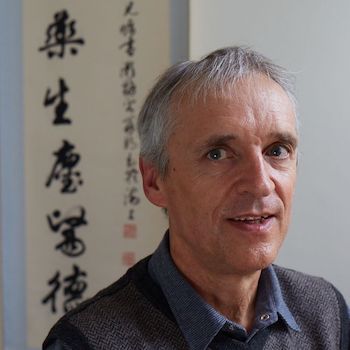
Volker Scheid, Ph.D
I grew up in rural Germany in a family engaged in the cultivation of medicinal herbs. Following an apprenticeship as a gardener I moved to England to study phytotherapy (Western herbal medicine) and Chinese medicine. Further studies led me to China, where I completed three years of postgraduate training at Beijing and Shanghai Universities of Chinese Medicine and also apprenticed with several nationally renowned physicians.
My clinical studies led to a deepening academic involvement with East Asian medicines, which I pursued at the University of Cambridge, the School of African and Oriental Studies (London), and the University of Westminster, where I was Professor of East Asian Medicines and Director of EASTmedicine (East Asian Sciences and Traditions in Medicine). I have published over thirty papers in peer-reviewed journals, as well as two influential monographs: Chinese Medicine in Contemporary China (Duke UP 2002) and Currents of Tradition in Chinese Medicine, 1624-2000 (Eastland Press 2007). I am the lead author of Formulas & Strategies, 2nd ed. (Eastland Press 2009)
Throughout my academic career I continued to practice, and by now have almost forty years of clinical experience. As a teacher, my aim is to guide students to become rounded practitioners by learning to work effectively with different tools and perspectives. I refer to this as meta-practice.
Explore Volker Scheid’s new book, Searching for the Dao of Medicine. Use the code Sche6341 to receive 50% off through the end of October.
Visit his website and access the free eBook here.
Here’s a short documentary on Volker’s work.
You don't have access to purchase this item.


