

Acupuncture and Western medicine don’t have to speak different languages. Practitioners who understand both can offer something neither tradition delivers on its own.
In this conversation, I sit down with Dr. Chi-Chi Tang — physiatrist, former St. Louis Rams team physician, and acupuncture practitioner — to explore what a sports medicine lens brings to needling work.
We discuss why palpation is missing from most medical exams and what that costs clinicians, how myofascial chains may be doing the work that meridian theory has described all along, and what the fascia reveals about why acupuncture works.
We also explore posture assessment, nerve anatomy, the Stecco family’s fascial research, and why the greatest tension in the body is often far from where the patient feels pain.
Finding the source isn’t always obvious. Sometimes it takes learning to read the body in ways that Western training alone never quite teaches.
Tip#1: Diagnosis, diagnosis, diagnosis. Tip#2: When needling, always think about what structure you are trying to hit.
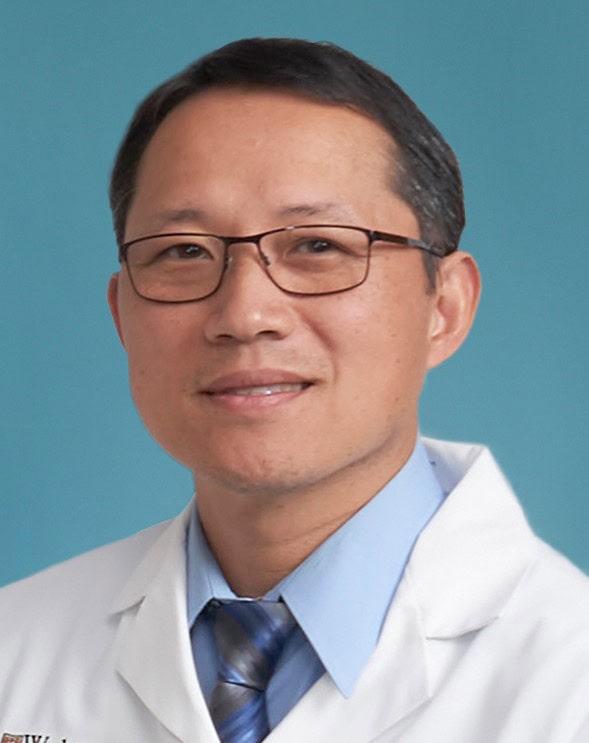
I did my undergraduate studies at Duke University majoring in biomedical engineering, and got my medical degree from the University of North Carolina in Chapel Hill. I then completed my residency in Physical Medicine and Rehabilitation at the University of Michigan, and did an additional year of fellowship training in non-operative sports medicine at WashU in St. Louis. I am currently an associate professor of Orthopedics at WashU and am heavily involved with helping to train the current fellows. I have had extensive experience working with sports teams and was previously a consultant for the NFL St. Louis Rams, and am currently a team physician for WashU athletics. For my acupuncture training, I completed the Helms Medical Institute course in 2008 and am a fellow of the American Academy of Medical Acupuncture. I received additional acupuncture training from my shifu Dr. Ling Guan from the 301 Peoples Liberation Army General Hospital in Beijing China, and I take a structure-based approach to medical acupuncture. I treat various musculoskeletal injuries and pains using non-operative techniques. This includes not only performing acupuncture/dry needling, but also doing platelet rich plasma injections, extracorporeal shockwave treatments, ultrasound guided injections, and fluoroscopic guided lumbar and peripheral joint injections. I also have special expertise in musculoskeletal ultrasound, oftentimes using this modality to help with diagnosis of various conditions. I am also a member of the WashU Living Well Center, which is a program that provides patients with a unique lifestyle based treatment approach to help them meet their health and wellness goals.
Unlock deeper healing with the Stecco Fascial Manipulation method—backed by emerging clinical research. Book your appointment or visit Chi Tang’s website.


You don't have access to purchase this item.


