


#482
October 13, 2026

The Conundrum of Singularity & Diversity in the Practice of East Asian Medicine
James Flowers

Our Sponsors

Every tradition has an official story, and then it has the people who actually treat patients. In this conversation with James Flowers, a historian, anthropologist, and practitioner of East Asian medicine, we ask a simple question: where did the Saam organ pairs come from? The answer, it turns out, is surprising.

That mystery opens onto what James calls the conundrum of singularity and diversity in East Asian medicine. We follow it from the Confucian kings of the Joseon dynasty, who declared prevention the best medicine, through the Japanese occupation and a century of rebellious Korean doctors, all the way to the treatment of Covid.

Along the way, we weigh standards against clinical experience, consider who holds the authority to say what’s right, and ask whether Saam medicine is Buddhist or Confucian at heart.

Listen in for a conversation that moves between royal courts and modern clinics, canon and experience, and the lingering question of what medicine is and who gets to decide.

In this episode, we discuss:

  • The riddle of the Saam organ pairs – Why a pairing so useful in clinic has no traceable source, and what it means to build a practice on something no book can confirm.
  • The “great harmonizing channel pairs” – How Michael came to see the pairs as complete inverse mirrors of one another, and why that symmetry makes them such a powerful way to harmonize the body.
  • Singularity and diversity in East Asian medicine – The conundrum James raised in an email: a tradition that claims one canon yet is practiced in countless, often conflicting, ways.
  • Lineage versus potency – Why Chinese-flavored traditions ask you to trace every idea back to a source, while Korean practice is more comfortable trusting what works, written down or not.
  • The Joseon kings and medicine as moral duty – How Confucian rulers declared prevention the best medicine and made following their health guidance an obligation of a good subject.
  • The Japanese occupation and the birth of a Korean flavor – How the collapse of the old system pushed doctors to stand up and define for themselves what medicine is.
  • A century of troublemaking doctors – A look at Korean practitioners as rebels and rabble-rousers, from the colonial era through the COVID response.
  • Strikes, student protests, and the Taiwan checkout counter – Why Korean doctors take to the streets, and how a country where herbal formulas require a physician contrasts with one, like Taiwan, where Xiao Yao San sits beside the register.
  • Standards versus the individual patient – Why washing your hands before surgery is wisdom, while the nut-and-bolt logic of standardization starts to fray when it meets human biology.
  • Who gets to claim authority – Whether seven years of watching something work in clinic is enough ground to stand on, and the difference between wanting autonomy and respecting authority.
  • Yangsheng as the real medicine – Why caring for yourself and keeping good psychological hygiene may be the moral heart of the practice, and a doctor’s responsibility to hold patients to it.
  • The streams of Saam acupuncture – A tour of the Korean schools, from the five-phase constitutional approach, to the four-needle protocol, and the shared foundations beneath their differences.
  • Buddhist or Confucian? – Whether Saam medicine reflects its monk origin or the Confucian world of the Joseon court, and whether Chinese medicine itself is more Confucian than Daoist.

Embrace reverence for the teachings in the old texts, while at the same time embrace irreverence by striking our own paths. With our own agency, we create and innovate medicine since our own clinical experience is our best teacher.
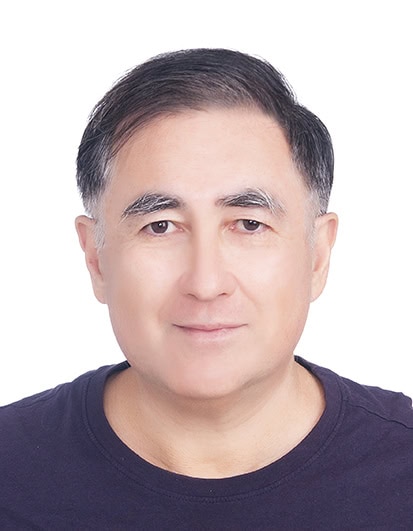
Portrait of a holistic health expert with a calm expression.

Dr. James Flowers

I am a Chinese Medicine practitioner and historian of medicine. I am currently a Brain Pool Research Fellow at the Climate-Body Institute, Kyung Hee University, and serve as Vice-President of the International Association for the Study of Traditional Asian Medicine. I am also Director of the International Society of Oriental Medicine and East Asia Editor of Asian Medicine. I hold a PhD in the History of Medicine from the Johns Hopkins University School of Medicine. Previously,

I operated my clinic in Sydney, Australia. I also taught Chinese medicine at the Western Sydney University and Sydney Institute of Chinese Medicine. I also served as the President of the Australian Acupuncture and Chinese Medicine Association for nine years.

I have published articles in journals such as the Social History of Medicine, and Asian Medicine. My current book project explores Eastern medicine in Korea during the first half of the twentieth century.

Links and Resources

Visit James Flowers’ website to learn more.

Member Only Content

This additional content is available to members of our podcast.

Explore Similar Podcasts

Subscribe to the Qiological Podcast in Your Favorite Player

You don't have access to purchase this item.