


What was it like to learn acupuncture in the United States before there were textbooks, established schools, or a clear idea of what an acupuncture education should look like? People found what they could, copied notes, and learned from whoever they could.
In this History Series conversation with Joyce Singer, Bob Felt, and Stuart Watts we remember Dr. James Tin Yau So. Joyce and Stuart were students of Dr. So, and Bob was a publisher who worked to bring Dr. So’s methods into print.
We’ll discuss his unique clinical approach, his use of moxa and gua sha, and what it was like to learn from someone who put practice ahead of theory. We also look at the early days of the New England School of Acupuncture. How different streams of acupuncture emerged, and the tensions that came along with them. We’ll also hear about the challenges that went along with running a school, and the shaky ground NESA was built on, and managed to survive.
There’s a lot in this conversation about where our profession came from. In some ways we are still wrestling with fundamental questions: how do we learn, what do we call the “real” medicine, and what can clinical experience teach us?
Listen in for a reflection of the past that also invites us into the challenges of our current moment.
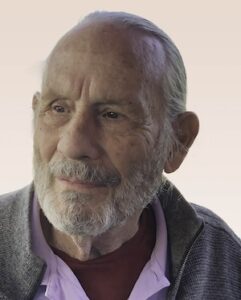
I’m an old hippie. After a year in jail for marijuana, I was tossed out of college with a BA in Humanities. Because of my history of draft resistance, psychedelic adventuring and Vietnam protests, the one job I could get was with a start-up computer firm. I became very well paid and studied technical writing, computer programming and management at graduate school.
As soon as I finished government supervision, my group of friends and I moved to Boston to study Macrobiotics with Michio Kushi. After three years, with two partners and my mother’s “egg money,” I bought the books and furnishings of bankrupt macrobiotic bookseller Tao Books at a public auction. This became the Redwing Book Company. Although for the first couple of years I needed to travel teaching massage, manage a start-up and restore a bankrupt food company, Redwing became capable of (barely) supporting my partner, Martha Fielding, and myself full time.
By the late 70s, I had written software to manage mailing lists and produce catalogs without the expense of mailing houses and expensive production firms. This permitted a sweat-capital entry to publishing and distributing beginning with Tin Yao So’s “Black Book.” We then sold our retail stores to Shambhala Books and since then have concentrated on the publication of works in the fields of acupuncture and Chinese medicine.
I am continuing these projects at a much slower rate at my present age.
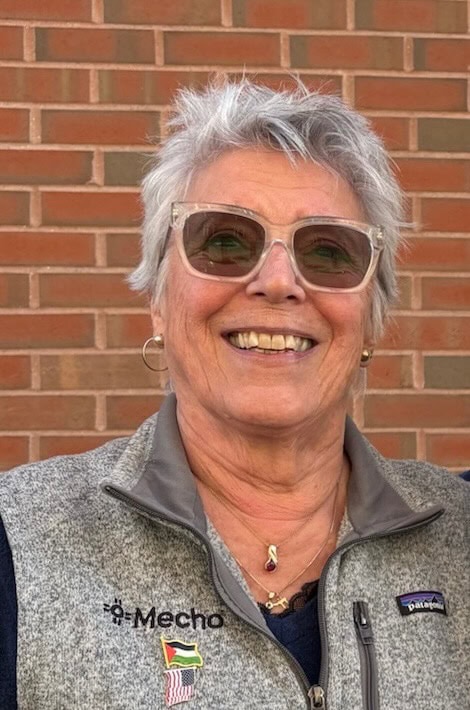
Joyce Singer
In 1977, I was living in NYC. I went to visit some friends in Cambridge and I saw a flyer in a health food store about The New England School of Acupuncture. At that time it was in a gorgeous old Mill Building in Watertown MA. I think that Arnie Friedman and Stephen Breeker started the school. The tuition was something like $600 for the first semester.
As soon as I met Dr.So, I was sold. I sublet my apartment in NY and moved back to MA. I started in February of 1978. Classes started in the Fall and also in February. They were in the evening so I was able to work during the day.
As I finished my first year, they added a second year. And Ted Kaptchuk joined the staff as well. He explained the theory of TCM. Dr. So’s book was formulaic.
On Saturday morning I would assist Dr. So at Jim Doyle’s office in Newton. He was amazing to watch. He wouldn’t let anyone leave until they felt better and he would ask them what % improvement they felt. He used a lot of direct moxa – most people let him do it..
Stuart Watts
Stuart has been in clinical practice since 1972, using acupuncture, herbs, Asian massage, manipulation and a wide variety of combined Naturopathic techniques in many places in the United States and several other parts of the world.
He has founded 5 nationally accredited acupuncture programs and colleges in the southwest region of the United States, the Academy of Oriental Medicine – Austin, Southwest Acupuncture College, the Santa Fe College of Naturopathic Medicine, the North American Academy of Advanced Asian Medicine and the Institute of Traditional Medicine (later becoming the International Institute of Chinese Medicine).
Stuart co founded several of the national acupuncture associations and organizations over many years. Stuart has been instrumental in the formation of acupuncture laws and legislation in several states in the Southwest. He has volunteered for various organizations since 1982 usually serving as treasurer due to his background in accounting and business. He currently lives in Albuquerque, NM with his wife Lee.


