Good medicine has less to do with having the “right system” and more to do with the human being holding the needles. With the way we listen. The way we wait. The way we’re willing to not know… yet.
In this conversation with Stephen Brown we trace his unlikely path from welding in a west coast shipyard—literally working with fire and metal—to becoming one of the key bridges between Japanese acupuncture and the English-speaking world.
Along the way he unpacks how history, culture, and politics have shaped East Asian medicine in Japan, Korea, China and beyond, and why arguments about “the one true method” miss the living heart of the work. We wander through blind practitioners and palpation-rich traditions, meridian therapy, “scientific” acupuncture, dry needling, and the long-standing turf skirmishes between them.
But repeatedly Stephen brings us back to the clinician’s interior: the courage to admit “I don’t know yet,” the discipline of returning to basics, the craft of letting the body teach you through touch, timing, and attention.
Listen into this conversation on how Stephen refuses both magical thinking and rigid certainty. Instead, he points toward a grounded intuition born of repetition, body-based knowing, and genuine curiosity about the person in front of us. It’s a generous, searching exploration of what it means to practice acupuncture as a lifelong craft, in a world that keeps trying to turn it into a billable procedure.
When we walk our body engages in an intricate process of self-correction.
As our body navigates through space, internal feedback loops between brain, limbs and sensory organs keep our legs and hands in their proper places and our balance just right.
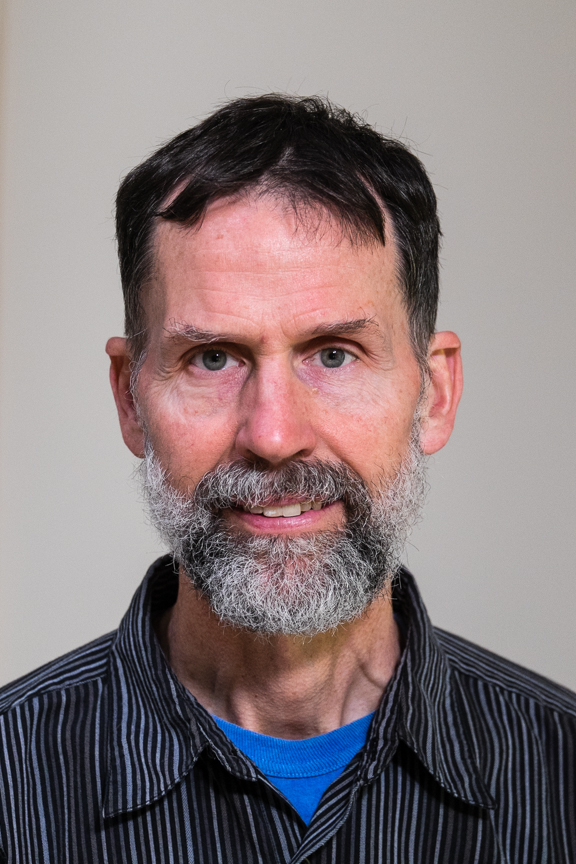
Stephen Brown, L.Ac
Stephen Brown, L Ac. graduated from Japan Central Acupuncture College in Tokyo in 1983. He is licensed to practice shiatsu, acupuncture, and moxibustion in Japan. He studied qigong and acupuncture in Beijing, PRC for three months early in 1984. He returned to Japan afterward and continued his studies in Sotai and Zen Shiatsu. In this period Stephen co-authored Chigong for Health with Masaru Takahashi and also translated the texts Sotai: Balance and Health Through Natural Movement, by Hashimoto Keizo MD and Meridian Exercises, by Masunaga Shizuto.
Stephen began his teaching career in 1985 as an instructor for the International Acupuncture Training Program of Kuretake Institute in Tokyo. He moved to the Seattle area in 1986, where he joined the faculty of the Northwest Institute of Oriental Medicine, and has been teaching and practicing shiatsu and acupuncture around Seattle ever since. Stephen is currently a core faculty member of Seattle Institute of Oriental Medicine, where he teaches shiatsu, Sotai, Japanese styles of acupuncture and moxibustion and supervises these clinics.
His first translation of a Japanese acupuncture text was Introduction to Meridian Therapy by Shudo Denmei, which was published in 1990. Shudo Denmei has comes to teach in the US ten times since 1992, and Stephen has served as his interpreter every time. He translated Shudo Denmei’s second and third books, Finding Effective Acupuncture Points and 60 Years of Practice which were published in 2003 and 2023 respectively. In addition to assisting his teacher, Shudo Denmei, Stephen has interpreted for many prominent acupuncture teachers visiting from Japan. Stephen is founding member of the North American Journal of Oriental Medicine, a journal devoted to traditional Japanese medicine, and has served its assistant editor.
The North American Journal of Oriental Medicine is a fantastic resource on Japanese acupuncture.
You don't have access to purchase this item.