#449
February 24, 2026

History Series, In the Footsteps of the Yellow Emperor
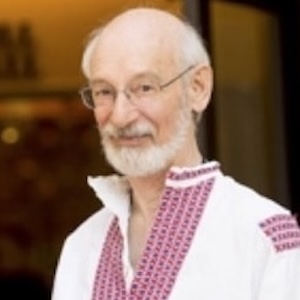
Peter Eckman, M.D, Ph.D

Our Sponsors

Often enough, medicine evolves not through the accumulation of answers, but instead by posing annoying questions. The thing about learning, it usually carries an element of disruption. 

In this conversation with Peter Eckman we follow him in his journey of sleuthing out where JR Worsley learned his medicine. But, it’s not just a story of where Worsley got  his stuff, to set the stage we have to go back to the shaman practitioners of a time before history. Then come forward through the pantheon of Chinese doctors of the past, and then into the modern age where colonialism opens the door to acupuncture making its way into the West. 

Peter’s book, In the Footsteps of the Yellow Emperor details a story that goes from East to West and back to the East with a new Chinese language edition. What better place for a discussion like this than in a History Series conversation?


In this episode, we discuss:

  • The origins of J.R. Worsley’s acupuncture training – curiosities and contradictions.
  • The formulation of the “unbroken lineage” narrative – how Worsley’s style was synthesized following a “Eureka moment” during a trip to Taiwan to study with Wu Wei Ping and Dr. Xu.
  • The integration of homeopathic concepts into acupuncture – the influence of the “law of cure” and the perspective of homeopaths like Malcolm Stemp on the development of Worsley’s system.
  • Refining acupuncture through “Constitutional Conditional” lenses – development of a practice style that distinguishes between a person’s underlying constitution and their current condition.
  • The historical catalysts of acupuncture in the United States – the three seminal events of the late 20th century: Nixon’s 1972 visit to China, James Reston’s post-operative treatment, and the publication of Ted Kaptchuk’s The Web That Has No Weaver.
  • Clarifying entry-exit point blocks as yin-yang theory – moving away from five-element explanations to see these blocks as imbalances within the same element’s Yin and Yang meridians.
  • The evolution of “Entry” and “Exit” point terminology – noting that these terms are not found in Han Dynasty classics but likely originated in the 1700s.
  • The Akabane method and the appropriation of French traditions – exploring the 20th-century Japanese diagnosis technique using incense sticks and Worsley’s uncredited use of Felix Mann’s work.
  • Acupuncture as a pursuit of perpetual inquiry – the philosophy that practitioners should emulate the scientific process of constant learning and seeking the “next step” rather than a final answer.
  • Deconstructing “transmission” and the honorific of “master” – reframing these concepts as the concrete teaching of practical skills rather than mystical energy transfers.
  • Ownership and the “legalization” of medical traditions – emerging tensions regarding who “owns” a lineage.
  • The circular journey of acupuncture knowledge back to China – the significance of translating and teaching Western acupuncture histories and styles, such as those by Nora Franklin, back in China.

Try to learn as much from your failures as from your successes. That’s why every Master I’ve met is still just a student.

Peter Eckman, M.D., Ph.D

I’m an MD with a specialty practice of acupuncture for 50 years. I’ve had many teachers along the way to developing my own style called Constitutional Conditional Acupuncture. It prioritizes pulse diagnosis as transmitted from China, Japan, Korea and India. I’ve taught this approach internationally, including 3 multi-day workshops in China pre-pandemic.

I currently have 4 books published plus numerous journal articles. My belief is that acupuncture and pulse diagnosis are aspects of an Eastern scientific tradition that complements the Western one. It is based on resonance theory or gan ying as its axiom. The Yijing, Neijing, Nanjing and Maijing together with Huainanzi and Daodejing still have hidden gems to teach us.

Like the Dao, you can never exhaust their supply of wisdom. I have even discovered a way to treat cancer with acupuncture that works on the illness itself, not merely the symptoms or side effects of Western therapies. And every day in clinic is still an adventure, even in my eighth decade.

Links and Resources

You can find Peter on his Website and over on the Scholars of Chinese Medicine Facebook Group.

Here’s a list of Peter’s books.
In the Footsteps of the Yellow Emperor
The Compleat Acupuncturist: A Guide to Constitutional and Conditional Pulse Diagnosis
Grasping the Donkey’s Tail
Acupuncture Pulse Diagnosis and the Constitutional Conditional Paradigm

If you want to organize a hands-on workshop, contact him at [email protected]

Member Only Content

This additional content is available to members of our podcast.

Explore Similar Podcasts

Subscribe to the Qiological Podcast in Your Favorite Player

You don't have access to purchase this item.