






Some concepts in Chinese medicine don’t need more poetry. They need a hands-on palpable marker, and a willingness to admit, “I think I get it… and then the light changes and I can’t see it.” That’s the territory we’re in with the Ming Men—the so‑called Gate of Destiny, the fire that isn’t just heat, the thing we can discuss over the centuries and still not be sure about when meeting it again on Tuesday afternoon in clinic.
This panel conversation is an attempt to better understand the Ming Men. Not by flattening it into one definition, but by tracking it from different angles—textual, palpatory, alchemical, ecological—and seeing what stays consistent as the perspectives change.
Anne calls it an activation power that wants to move freely, so a person can occupy their whole existence without leaving corners uninhabited. Thomas brings it straight to the table: put your hand below the navel, check the relative coldness, watch what happens to breath, warmth, and the eyes when things begin to organize. Zev keeps widening the lens—ministerial fire as warmth and life, as clinical strategy, and as a reflection of the larger world we’re burning to keep ourselves comfortable.
This is delightfully open-ended conversation on the Ming Men, one that helps to guide our focus not by providing answers, but by exploring enlivening questions.
Keep the NanJing – Classic of Difficulties, in your pocket! • Thomas Sørensen
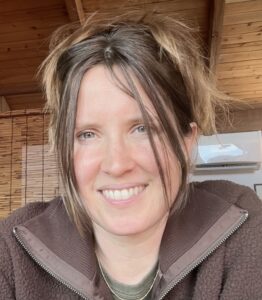
Anne is a published author, educator, and editor. She contributed a chapter exploring Chinese medicine in relation to calendrical time, almanac influences, and astronomy in acupuncture to A Ring Without End: Reflections on Classical Chinese Medicine, co-authored with Z’ev Rosenberg and Stephen Cowan. She has taught doctoral-level students across the United States on her research, scholarship, and clinical applications.
A Chinese Polestar astrologer in the tradition of Liu Ming, Anne studied astrology, Chinese medicine, and food therapy with him for twelve years until his death and now serves as an editor on his forthcoming book on Chinese Polestar astrology.
Anne has trained through private apprenticeships for over twenty years in the United States, Japan, and India. Her clinical practice brings classical teachings into modern application, with particular focus on autoimmune and chronic disease, digestive and nervous system disorders, emotional overwhelm and burnout, sleep disturbances, pain, and reproductive and life-stage transitions. She received her doctorate from Five Branches University and graduated magna cum laude from the Acupuncture and Integrative Medicine College.
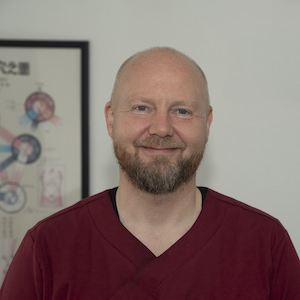
Thomas Sørensen
I was introduced to acupuncture in 1996 while undertaking studies in Korean language and culture in Seoul, South Korea. One acupuncture treatment with a few needles on the opposite leg of the knee that I had injured during martial arts practice took away my knee pain instantly and completely. This experience changed my life around – from the first needle I had a new destination. I had to learn acupuncture.
After returning to Copenhagen, Denmark, from Korea, I started studying TCM. I went into private practice immediately after graduating, but didn’t find the TCM style of acupuncture a good match for me so I started looking at different styles of acupuncture and Japanese Meridian Therapy showed up on my radar. I was very fortunate to be accepted as a student of Ikeda Masakazu Sensei. He instilled in me a deep respect for the classics and showed me how to think in terms of basic principles and how to be pragmatic about them. I really owe him my practice.
Now I practice acupuncture based on Meridian Therapy diagnostic- and needling techniques, guided by the classics and incorporating the very powerful protocols of Korean Saam acupuncture. …and after close to 20 years of practice I am still having fun in the clinic every day.
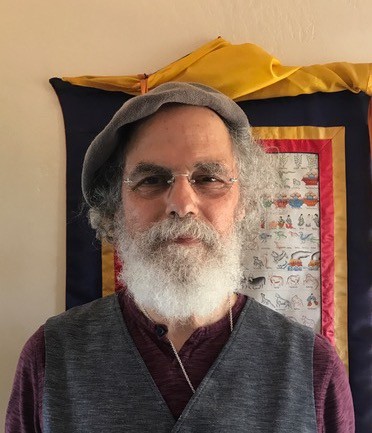
Z’ev Rosenberg, L.Ac
Z’ev Rosenberg began his study of Chinese medicine in the early 1970s, with studies in macrobiotics and Shiatsu. He was introduced to the theory of Chinese medicine at that time by Michael Broffman, L. Ac. He received a degree from the Santa Fe School of Natural Medicine in herbology and massage in 1976, the Kushi Institute (macrobiotics and Shiatsu) in 1979, Southwest Acupuncture College in 1983, and the Emperor’s College of Oriental Medicine (post-graduate master’s degree in Oriental Medicine) in 1989. Z’ev has worked as a macrobiotic counselor and shiatsu practitioner throughout the 1970s, and has been in full-time practice in acupuncture and Chinese herbal medicine since 1983.
Z’ev has lectured widely both to the public and to students of both Chinese medicine and macrobiotics over the last 42 years. He is the former president of the Acupuncture Association of Colorado (AAC), where he spearheaded a successful drive to register acupuncture practitioners in that state. He also has written several articles for professional Chinese medical journals, including Oriental Medicine, Protocol Journal of Botanical Medicine, Journal of Oriental Medicine in America, Journal of Chinese Medicine, and most recently The Lantern Journal.
You don't have access to purchase this item.


