

When treating warm pathogens, it’s small well-timed interventions that bring about effective clinical results. The treatment doesn’t look dramatic, the key to success is meeting the body where it’s ready to respond.
In this Shoptalk we sit down with Kerri Westhauser for a conversation on using Wen Bing formulas in the treatment of colds, flu and coughs.
We’ll discuss why the oversimplification of “wind-heat equals virus” is not a clinically helpful perspective, along with the Wen Bing focus on timing and layers. Kerri reminds us that when you see a patient matters just as much as what you see.
We also discuss the importance of the fluids and the recovery phase, as a way to consider treatment for lingering dryness, fatigue, and scratchy coughs that remain after the acute illness has resolved. Along with why light, aromatic support often is more helpful than heavy cloying tonics.
As is often the case with Chinese herbal medicine, effective treatment isn’t about doing more. It’s about doing just enough with clarity and precision.
The highest level of herbal prescribing is by temperature, flavor and direction.
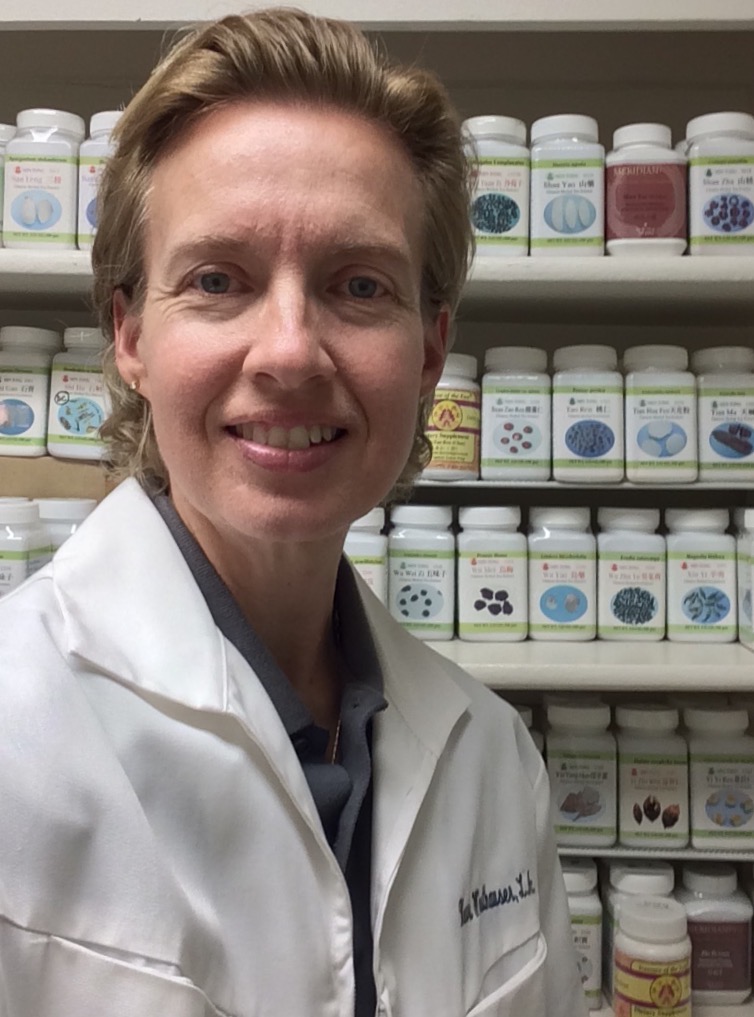
I am licensed in Maryland, Virginia and Washington, D.C., a former professional member of the American Association of Acupuncture and Oriental Medicine(AAAOM) and Board Certified by the National Certification Commission for Acupuncture and Oriental Medicine (NCCAOM) in Acupuncture and Chinese Herbology.
I have been in private practice in the Metropolitan area since 2004 and have treated over 20,000 patients. Since 2013, I have worked at the Maryland University of Integrative Health as a clinical supervisor in the Chinese Herbal Program and is the former Director of the Chinese Herbal Program (2018-2022). In addition I am an adjunct faculty member at the Virginia University of Integrative Medicine and Yo San University.
I studied at the Maryland Institute for Traditional Chinese Medicine, the Shanghai University of Traditional Chinese Medicine in Shanghai, China and the Maryland University of Integrative Health. I have completed Mazin Al-Khafaji’s two year Dermatology Program and received my doctorate from the Pacific College of Oriental Medicine.
Visit Kerri Westhauser through the institutions she teaches with and collaborates alongside:
Yosan University of Traditional Chinese Medicine and TCM Academy


You don't have access to purchase this item.


